|
Look at how the uphill and flat road tests vary. Their sequences of oil types from most retarded to most advanced is: Uphill: Synthetic, Group 2 mineral oil, Semi-Synthetic, Castor. Flat Rd: Castor, Synthetic, Semi-Synthetic, Group 2. By leaving out castor then the obvious difference is that semi-syn and group 2 switch places. 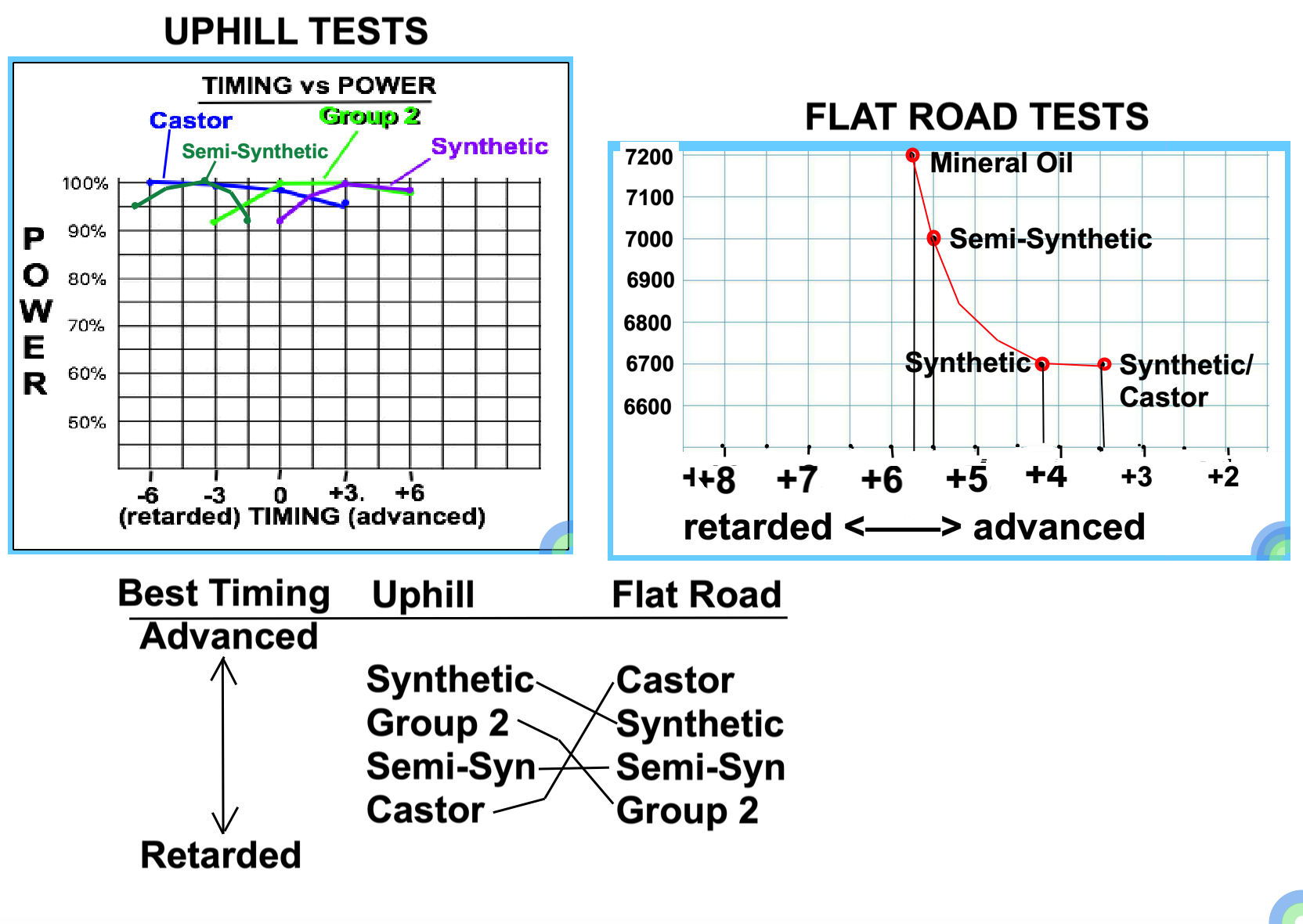 I set out to understand why the sequence of the "most advanced timing oil" to the "least advanced timing oil" (most retarded) is different with the two situations of going uphill, and riding on flat road. The most helpful way of understanding jetting for me has been considering how the fuel droplet size distribution changes with carb air speed (due to carb size), and type of premix oil usd (synthetic and castor favor large droplet size). 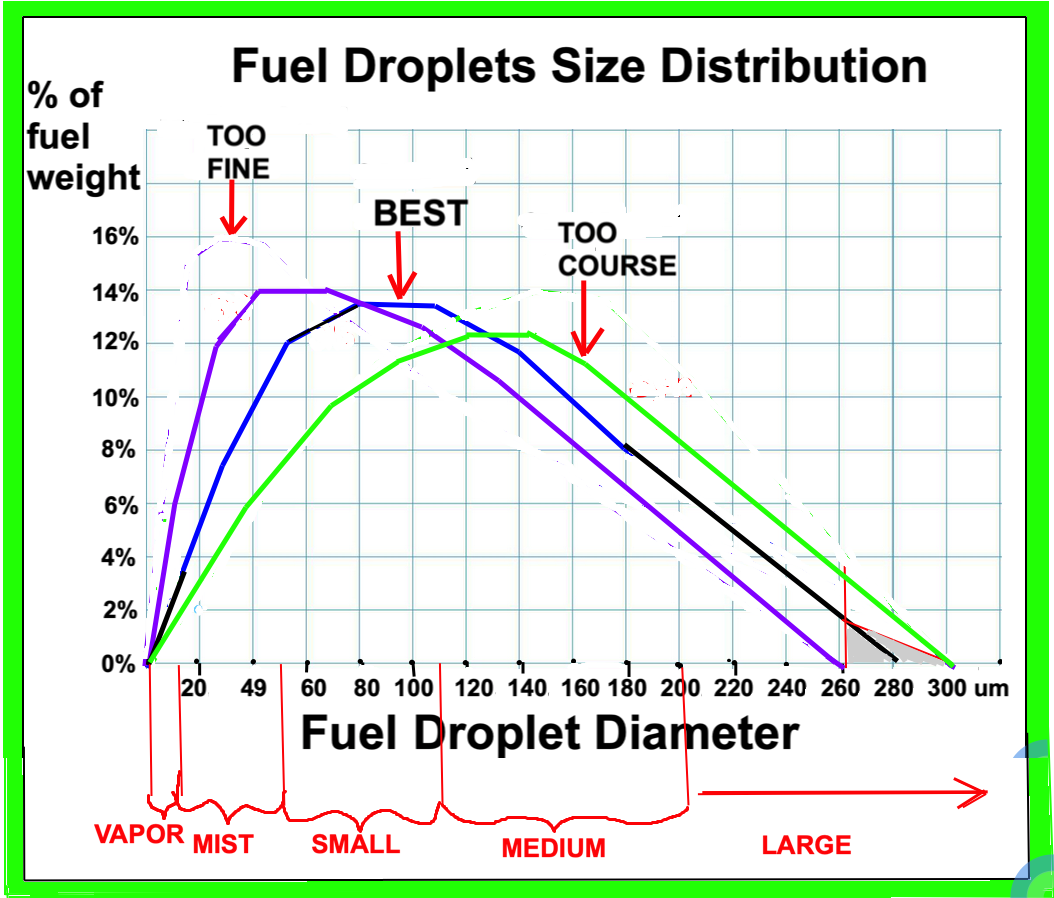 So now if we apply the two test result sequences of oil types from most advanced to least advanced to their respective section of the graph for their RPM then we can see that different oil types need different timing curves. Notice how castor has the flattest curve and how it was the oil of choice for racers back in the day of points ignition, before there were CDI's with timing curves. 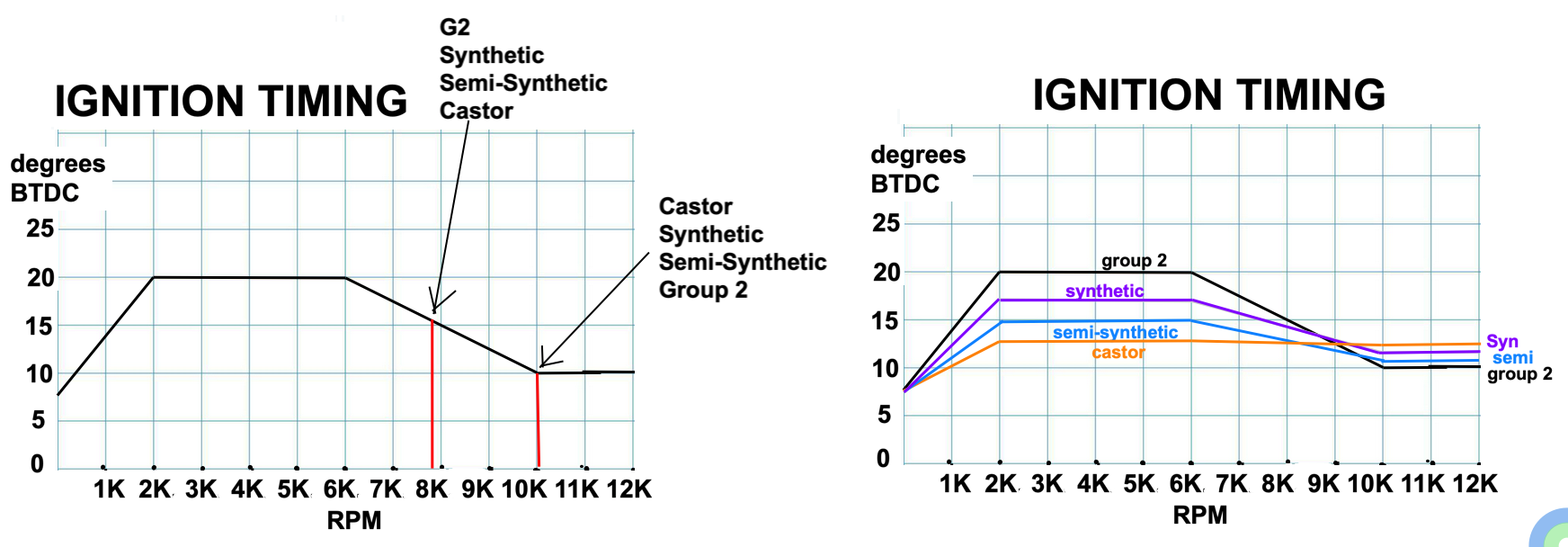 Now we can begin to understand the relationship between carb size, premix oil, and ignition timing. If they are synchronized together then the result is best power. An example of a common error is with owners of the YZ. Yamaha recommended using Yamalube with it and the engineers probably set the CDI's timing map to match the oil type of Yamalube which is a combo of Group 1 and Group 2. So then riders switch that out for a fully synthetic oil, not realizing they just created a mismatch and lowered engine power. KTM recommended Motorex which is mostly synthetic, Kawasaki recommended their KPO oil which is semi-synthetic, and Honda and Suzuki both recommended fully synthetic oil. |